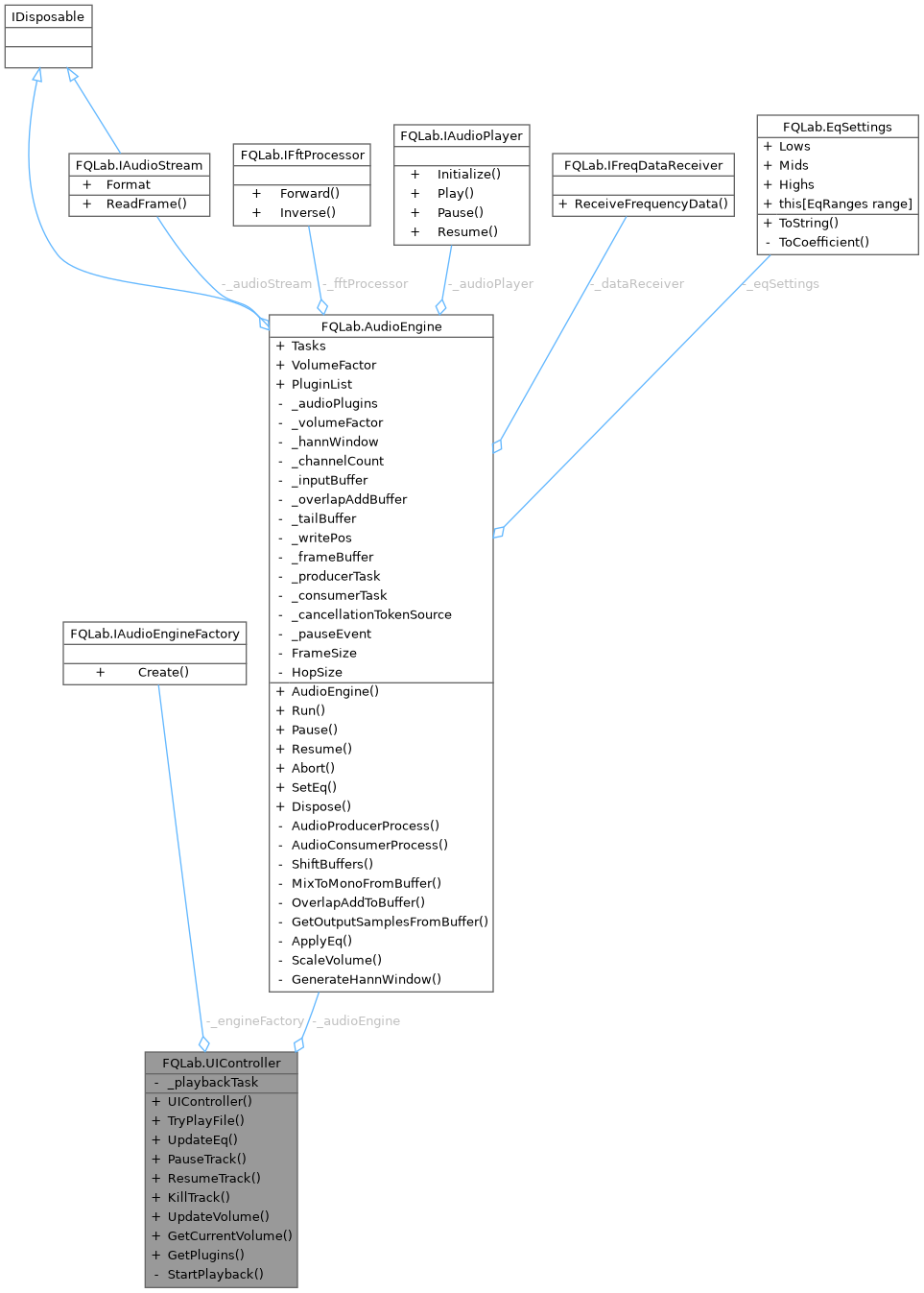
A core class of the program's UI. Keeps the state of the AudioEngine and processes requests to it made by individual Views. Ensures that all tasks on the engine finish and all resources are disposed of properly.
More...
|
| async Task | StartPlayback (IAudioStream audioStream) |
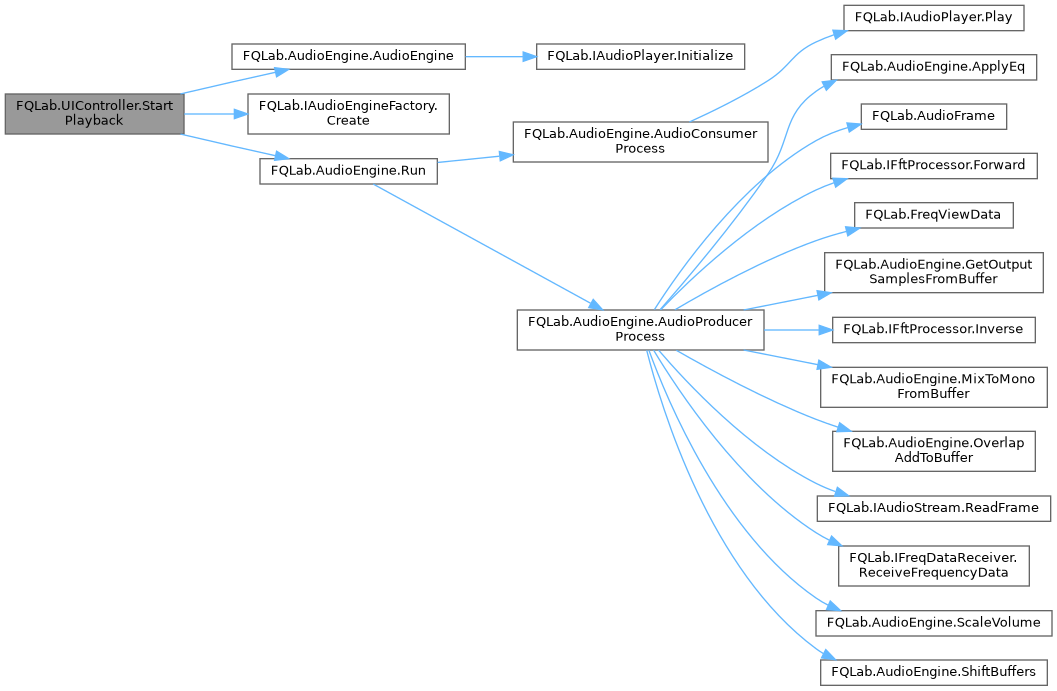
| | Manages lifetime of an audioStream and an audioEngine. Waits for all tasks on the engine to finish.
|
| |
A core class of the program's UI. Keeps the state of the AudioEngine and processes requests to it made by individual Views. Ensures that all tasks on the engine finish and all resources are disposed of properly.
◆ UIController()
◆ GetCurrentVolume()
| int FQLab.UIController.GetCurrentVolume |
( |
| ) |
|
|
inline |
Returns the current volume factor of the audio engine.
- Returns
- Volume factor normalized for a slider.
◆ GetPlugins()
◆ KillTrack()
| void FQLab.UIController.KillTrack |
( |
| ) |
|
Aborts the audio pipeline.
◆ PauseTrack()
| void FQLab.UIController.PauseTrack |
( |
| ) |
|
◆ ResumeTrack()
| void FQLab.UIController.ResumeTrack |
( |
| ) |
|
◆ StartPlayback()
| async Task FQLab.UIController.StartPlayback |
( |
IAudioStream |
audioStream | ) |
|
|
inlineprivate |
Manages lifetime of an audioStream and an audioEngine. Waits for all tasks on the engine to finish.
- Parameters
-
◆ TryPlayFile()
| bool FQLab.UIController.TryPlayFile |
( |
string |
filePath | ) |
|
|
inline |
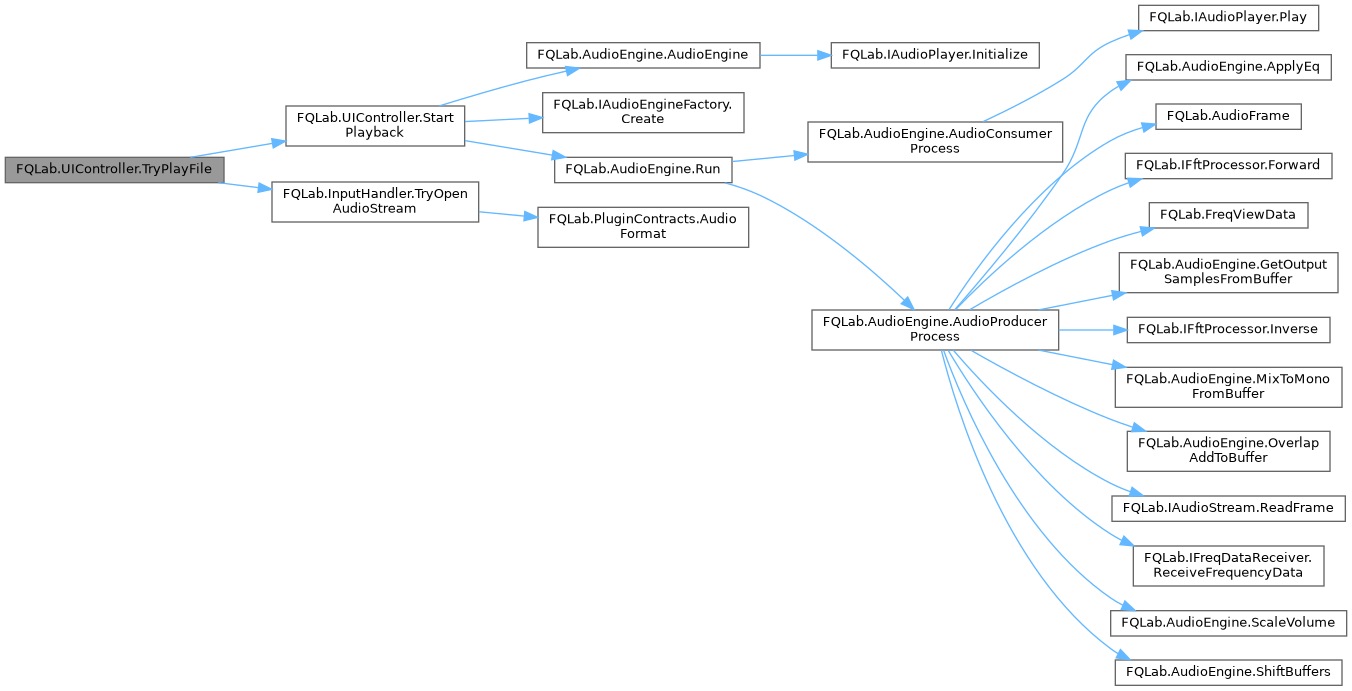
Takes a file and if successful starts the audio pipeline.
- Parameters
-
| filePath | Path to file to-be opened. |
- Returns
- Boolean value based on whether the operation was successful.
◆ UpdateEq()
| void FQLab.UIController.UpdateEq |
( |
EqSettings |
settings | ) |
|
|
inline |
Pushes EQ changes to the audio engine.
- Parameters
-
| settings | Exported EQ settings. |
◆ UpdateVolume()
| void FQLab.UIController.UpdateVolume |
( |
int |
option | ) |
|
|
inline |
Takes volume selection and handles proper conversion for the engine.
- Parameters
-
| option | Unconverted integer value of a slider. |
◆ _audioEngine
◆ _engineFactory
◆ _playbackTask
| Task? FQLab.UIController._playbackTask |
|
private |
The documentation for this class was generated from the following file:











 1.9.8
1.9.8